

Published April 2023 | Updated October 2026
Learn what a sisal rug is before you decide whether one is right for you. With over 30 years experience selling custom area rugs and wall-to-wall carpet, we’ve found that sisal remains the go-to choice for designers and residential clients. But sometimes a different natural fiber or synthetic material is the better choice based on your project. In this comprehensive post, we answer the most common questions our customers ask, such as “What is sisal?” and “Can sisal be used outdoors?” so you can make an informed decision about whether sisal is the right material for your next rug.
- What is sisal?
- What is a sisal rug?
- Why does the design world love sisal rugs?
- What are the pros and cons of a sisal rug?
- The Art of Layering with Sisal Rugs
- Are sisal rugs pet friendly?
- Are sisal rugs easy to clean and maintain?
- Is sisal carpet good for stairs?
- How much do sisal rugs cost?
- Should I buy a sisal rug?
What is sisal?
Sisal is a natural fiber that is produced from the long leaves of the Agave Sisalana succulent plant. Agave Sisalana is indigenous to Central America and is now widely cultivated in arid environments in East Africa and South America. Tanzania, Brazil, and Kenya are a few of the top sisal producing countries.

A sisal plant looks much like a cactus, with thick lance-shaped leaves assembled like a rosette around the stalk of the plant. Sisal is a renewable resource: the lifespan of a sisal plant is about 8 years, with the plant reaching maturity between 2-5 years. Once mature, the leaves are cut away from the stalk and “washed” to remove the pulpy fibers. When a plant stops producing leaves, it sprouts a central flower stalk with buds that become the next generation of Agave Sisalana.
After processing, sisal fibers are dried and bleached in the sun, then bundled and exported all over the world. Sisal’s tough fibers are ideal for many hardwearing products like cordage, ropes, and rugs. The fibers are remarkably versatile, extremely durable, and dye well, enabling us to produce sisal rugs and carpets in a range of shades and styles. We select premium grade sisal from Tanzania, Brazil, and Kenya and weave our rugs in Belgium and China.
What is a sisal rug?
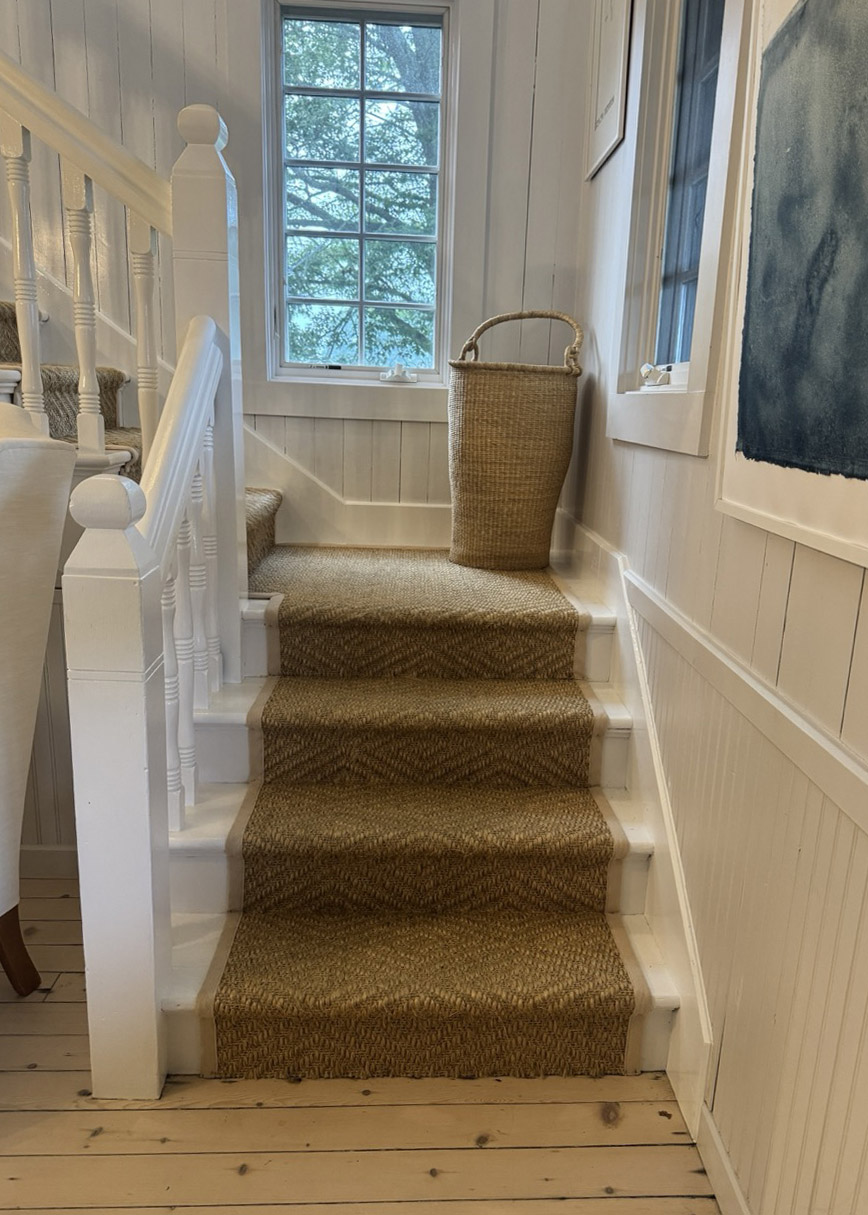
A sisal rug is usually woven flat (as opposed to tufted, for example) by interlacing sisal yarns on a loom and worked in a repetitive pattern to create different structures like a bouclé, herringbone or chevron, basketweave, or tiger eye. A flatweave rug does not have additional knots that make a pile. This lack of pile and the tightly woven warp and weft threads result in a very sturdy rug.
Image: sisal stair runner rug in a diamond pattern
Interested in learning more about flatweave rugs and carpets? Our Flatweave Rugs Guide covers how they’re are made, their unique characteristics, pros and cons, and how to choose the right rug pad.
Additionally, a natural latex backing is applied to sisal rugs which further increases the rug’s stability. To keep the rug from unraveling, border options like serging or an applied cloth border complete the rug. Finally, many of our customers opt for a rug pad beneath their sisal rugs. A rug pad protects your flooring, prolongs the life of the rug, and increases comfort by adding cushion.


Many natural products have an unadorned look that is soothing and easily blends with its surroundings. This is true of sisal as well, but sisal rugs have a rustic texture, come in an array of earthy hues, with yarns that may be thick and more smooth, or petite with a rugged feel. Together, these attributes yield a sisal rug full of visual and textural interest that harmonizes well with many decor styles.


Why does the design world love sisal rugs?
Interior designers look for certain characteristics in a product before they recommend it to their clients. Beauty, versatility, durability, timelessness, and customization are at the top of their list. Since sisal rugs embody all of these qualities, they remain popular year after year, regardless of changing trends.
Because of this enduring popularity, we’ve curated unique sisal weaves sourced from the best manufacturers in the US & Europe. Our sisal selection includes tightly woven or chunky sisals, neutral colorways, and a variety of patterns: we have a weave for every situation in which is sisal is appropriate.

What are the pros and cons of a sisal rug?
Sisal Rugs: Pros & Cons at a Glance
| Pros | Cons |
|---|---|
| Durable: Strong natural fibers stand up to everyday wear. | Sensitive to moisture: Water can cause staining, shrinkage, or discoloration. |
| Natural texture: Adds warmth and organic character. | Rough underfoot: Coarser than wool or many synthetic rugs. |
| Versatile: Available in a range of weaves, colors, and custom sizes. | Cleaning limitations: Spills require prompt attention and careful cleaning. |
| Renewable fiber: Made from the sisal plant. | Not suitable outdoors: Best in dry, indoor environments. |
Explore each of these advantages and considerations in more detail below.
Pros
- Always on Trend Designers love sisal’s design flexibility. You can easily pivot between a traditional style and a bohemian aesthetic by simply changing up accessories. This makes sisal a sound, long-term investment.
- Durable Sisal rugs are hardwearing. Sisal fibers, produced from the robust agave plant, have high tensile strength and do not break easily. Further, sisal yarns resist abrasion, so a sisal rug can handle wear and tear. No wonder sisal is one of the most durable natural fibers used in the carpeting industry.
- Natural Sisal a renewable, sustainable plant fiber traditionally grown with minimal use of fertilizers and pesticides. Sisal rugs are generally low in emissions and can be a good choice for allergy-conscious households. Their tight, flat weave construction reduces the risk of embedded dust and dirt, making particles easier to remove with regular vaccuuming.
- Versatile Sisal’s arresting textures and available patterns give designers a canvas to jump start their creative process. The right texture and pattern, like a chunky basketweave, petite bouclé or subtle herringbone, adds depth and interest to any design theme.
- Neutral Foundation Another appealing attribute of sisal lies in its earthy, soothing colorways. Natural sisal colors, ranging from light-infused beiges to robust browns, form a perfect color palette. These neutral tones enrich any design style, whether it is traditional, modern or minimalist.
Looking for a sisal rug that has NO VOCs? Our EarthSISAL™ is the right choice. Crafted from natural sisal and with a recyclable, all natural fleece backing (no adhesives or latex used), an EarthSISAL™ rug or carpet is completely chemical free and brings a timeless sisal bouclé look into any healthy living space.
Cons
Indoor Only We often get asked “are sisal rugs good for outdoor use?” Our answer is no. Sisal does not hold up well in wet conditions or humid environments like bathrooms. Reserve your natural sisal for arid, indoor settings.
Alternatives? A synthetic sisal rug is a great choice. Synthetic sisal mimics the look of natural sisal but is highly resistant to moisture and easy to clean. Additionally, we have a diverse selection of outdoor rugs to fit your needs.
Sisal Is Not Soft Sisal rugs are made from the long leaves of the agave plant, resulting in a strong but stiff fiber that can feel coarse on your bare feet. Many people love the feel of sisal under their feet, but it is not for everyone. We recommend ordering a sisal swatch sample to discover if you enjoy the feel of sisal.
Alternatives? Chunky weaves such as Munich or Berlin feel softer underfoot and will smooth over time. Another option is to blend sisal with wool, one of the softest natural fibers on the market. We offer a wide array of beautiful sisal-wool blends in fresh colors and unique patterns.
Jute is also a great alternative to sisal. Jute is one of the softest natural fibers and a jute rug has the same organic look as sisal. Learn more about the differences between jute and sisal in our blog post What is the difference between sisal, seagrass, coir, jute and abaca?
Sisal Stains Although sisal is natural and durable, once it is dried and woven, it stains easily—even spilled water may cause warping and leave a stain. See Are sisal rugs easy to clean and maintain? below for cleaning tips.
Alternatives? Our SisalPLUS stain-resistant sisal collection gives you classic sisal colors and structures with added stain protection. Each individual sisal yarn has been coated with stain-resistant and fire-retardant material that also repels liquids and increases UV stability. This Bluesign® approved treatment makes the SisalPLUS collection ideal for active, high-traffic spaces such as hotels, resorts, store designs and residential homes with kids and/ or pets.
The Art of Layering with Sisal Rugs
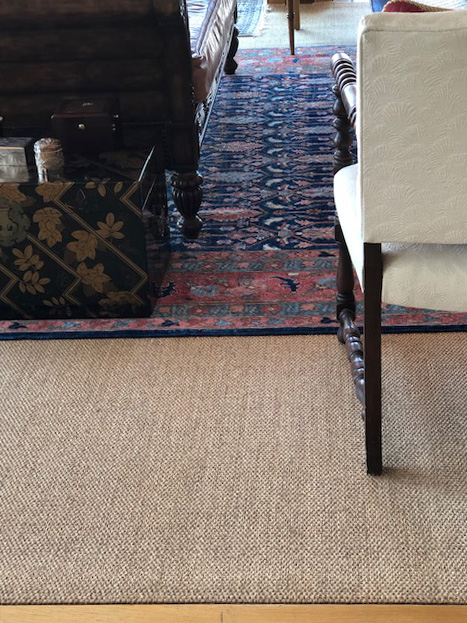
Sisal Tiles, a sisal rug, or sisal carpet installed wall-to-wall create a beautiful, natural base for layering a beloved vintage rug or colorful dhurrie. Sisal has long established itself as the preferred, timeless foundation for rug layering.


Are sisal rugs pet friendly?
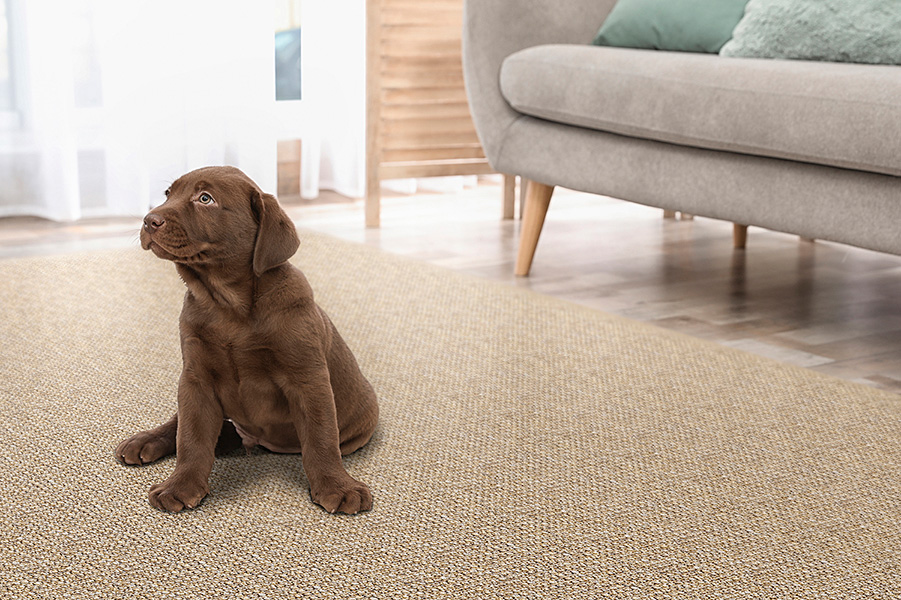
There is no perfect rug for our four-legged friends, but some weave materials fair better than others. Look for tightly woven, durable rugs that are easy to maintain. Natural sisal performs well in terms of durability, but its biggest drawback for pet owners is its lack of stain resistance.
If you are set on natural sisal, below are a few ideas to help you get the look you want in a pet-friendly home:
Image: SynSisal® Ravenna | mesquite
- Camouflage Choose a darker color that hides dirt or if your pet sheds a lot, choose a color similar to its fur. Patterns and bold textures are another way to distract from dirt and hair. Tip: For chewers, avoid fringes and loose threads.
- Sisal-Guard Apply Sisal-Guard to your rugs. Sisal-Guard is a spray-on sealant for natural fiber rugs that acts as a barrier to reduce the rate at which sisal absorbs liquid.
- Consider Seagrass Since seagrass fibers are non-porous, many pet owners who love natural flooring opt for a seagrass rug. Seagrass fibers do not absorb liquid and with prompt action, resist staining.
- Go Synthetic For complete peace of mind, a synthetic option like SynSisal is a great choice. SynSisal® mimics the traditional look of natural sisal in structure and color, but is stain resistant and contract rated.


Are sisal rugs easy to clean and maintain?
Not entirely. Natural sisal is sometimes described as easy to clean, but there’s an important distinction between routine maintenance and stain removal. While regular vacuuming effectively removes dirt and debris, treating spills and stains can be more challenging.
How do I clean a sisal rug?
Regular vacuuming is the best way to keep a sisal rug clean, but spills and stains require special care.
Image: rhine sisal rug grounds a space

We provide care and cleaning guidelines for all our weaves to help you protect your investment. Our Care and Cleaning Guide includes detailed instructions for different materials and a comprehensive spot removal chart, developed with input from flooring installers, customers, and sisal manufacturers. We have advice for any type of stain.
Here are a few quick tips for keeping your sisal rug looking its best:
- Adopt a “no shoes in the house” policy. This prevents dirt, dust, and other debris from entering your home in the first place.
- Vacuum often, ideally with a vacuum cleaner equipped with a HEPA filter. Use strong suction to pickup all the fine dust particles, but turn off that beater bar.
- Apply Sisal-Guard to your rugs. Sisal-Guard is a spray-on sealant for natural fiber rugs that acts as a barrier to slow the absorption of liquids.
- Since sisal is inherently absorbent, avoid placing your sisal rugs in damp environments or where spills are likely to occur such as kids’ spaces, dining rooms, or bathrooms.
- If a spill occurs, even if it is only water, attend to it immediately. Scoop up any solids and blot the spill gently with a white paper towel. Do not rub. Work from the outside towards the center of the spill.
Lastly, ask yourself if you are up for the care and maintenance that sisal requires. If you would prefer greater peace of mind, there are many alternatives! A stain-resistant sisal, a synthetic sisal, or SynSisal weave all make beautiful floor coverings with low maintenance.
Do sisal rugs shed and what is sprouting?
All plant fibers shed to some degree. Sisal sheds the least, and jute sheds the most. A tightly woven sisal rug like Astute or Madrid sheds less than chunkier sisal. Regular vacuuming will keep the debris at bay.
As for sprouting, customers often mistake sprouting for shedding. Shedding happens when small fibers loosen and detach from the rug. Sprouting happens when a yarn or thread that was tucked in during the manufacturing process pops out from the rug but is still attached.
Sprouting is a common process that occurs in many natural fiber rugs. It happens with regular maintenance and general wear and tear and is not a defect. Simply trim the sprout at pile height with a sharp scissor and do not pull. This routine maintenance will not hurt or affect the integrity of your rug. If you have questions, our customer service team is happy to help.

Learn More About SynSisal®
We took our extensive experience with sisal to develop a synthetic sisal product that goes where sisal can’t. The SynSisal® collection is made from ECONYL® yarns, a 100% recycled nylon with low VOC contribution and StayClean technology. SynSisal® mimics the traditional look of natural sisal in structure and color, but is soft underfoot and carries contract grade ratings.
Read more at SynSisal®—Sisal Without Limits
Is sisal carpet good for stairs?
Yes, when you choose the right weave. A stair runner must be durable, hard-wearing, and slip-resistant. Many tightly woven sisal carpets meet these requirements.
Image: contract coir, with 40% sisal, installed wall-to-wall on staircase and hallway

Why add a runner to your stairs in the first place?
Sometimes it’s to hide an old, unappealing staircase or avoid repainting it yet again. More often, homeowners want to protect their stairs or muffle noise. For others, it’s a design choice that emphasizes a particular style or adds warmth to an otherwise chilly space. Sisal is well suited to these purposes.
When is sisal not good for stairs?
There are three scenarios in which our sales team may recommend an alternative to natural sisal:
- You have your eyes on a chunky sisal weave.
- You live in a humid environment.
- You’re concerned about stains.
Sisal carpets with chunky or thick yarns are generally unsuitable for staircases because their smooth, thick fibers can create a tripping hazard. In the other two cases, we guide clients toward our stain-resistant sisal and synthetic sisal collections, which offer greater resistance to moisture and staining.
Aside from choosing the right carpet material, hiring a professional installer helps ensure that your stair runner looks great and performs well over time. For more details and inspiration, explore our Stair Runners Guide.
How much do sisal rugs cost?
Sisal weaves come with different price tags depending on the thickness of the fiber, the construction of the weave, the pattern and, of course, the size. For wall-to-wall installation, our sisal broadloom ranges between $70 to $200 per square yard. Custom area rugs also range in price, depending on the finishing and size. Here are some examples:

For a classic, flat bouclé sisal (like our Livos), an 8’x10’ rug is approximately $1200 (subject to change).

Our Legacy offers a basketweave construction and, for an 8’x10’, costs approximately $1500 (subject to change).
A chunky sisal with a graphic pattern (like our Helsinki) may be approximately $2200 for an 8’x10’ or $1100 for a 5’x7’ (subject to change).
Adding a cloth border or other designer finish around the edges of a custom sisal area rug will increase the final price as well.
Where can I buy sisal rugs online?
You can buy sisal rugs from us! We offer a wide range of premium sisal rugs made in the US or Europe, with an array of customizable options including borders, shapes, and sizes. Browse our collection and order samples to see and feel the weaves before making your selection. We offer free shipping, and our customer service team is available to provide design advice or assistance at any stage of your project.
How do I make a custom sisal rug?
While standard-sized rugs work great for some spaces, other rooms require a custom solution. We specialize in custom sisal rugs, making it easy to create a rug that fits your room and style. Here’s how to get started:
- Browse: Explore our sisal collection and use the filters to narrow your options by color, use, pattern, and more.
- Order Samples: We highly recommend ordering samples to see and feel the material. Colors can look very different on screen than they do in your space.
For more details, visit our How to Order Guide ↗ for step-by-step instructions.


Should I buy a sisal rug?
Sisal is an excellent choice if you value natural materials, distinctive texture, and durability. With a wide range of weaves, patterns, and colorways, sisal offers design flexibility for both traditional and contemporary interiors. However, its sensitivity to moisture and stains makes it less suitable for some spaces or lifestyles.
Still deciding? Explore these guides for help choosing the right rug for your space:
Natural sisal rugs bring warmth, depth and authentic beauty to residential and commercial interiors alike. Whether your project is a residence, boutique hotel, office or retail space, natural sisal has a purpose in any of these applications. We hope this guide helped you decide whether sisal is the right material for your project. If you have additional questions or need help selecting a weave, our sales our sales team is happy to help.

Want to explore more design styles?
Head over to our post How to Choose the Right Rug for Each Design Style to discover different design styles and unforgettable rugs.



12 comments
We have a painted sisal rug in a modern picasso type pattern with 4 vibrant colors of different shapes (circles, rectangle), long narrow straight patterns to long flowing curved patterns.
We want to do minor touch up of some of the painted areas. What type of paint do we use and the best method of application. It would seem like paint pens would work great because it is only small areas interior to the patterns that needs the color.
Would love your advice!
Hi…
We have three sisal area rugs, one that suffered an attack by a runaway iRobot (specifically for animals) …and has lots of “hair”, as a result. Can I just trim it and forget it?
Thanks!
Mary
Hi Mary,
Sorry to hear about the runaway iRobot and its attack on your sisal rug! If I understand correctly, the robot vacuum has shredded some of the sisal fibers on the top of your rug. In this case, trimming the loose ends with sharp scissors should be fine. Trim parallel to the surface of the rug and avoid cutting into the weave.
If the robot vacuum messed up an edge binding, that is more problematic and you should contact a rug fabricator in your area for help. We would not want your rug to unravel due to a compromised border. Feel free to contact our customer service team if we can help with anything else.
Regards,
Christy
Hi Patrick, having moved house my large Sisel rug will now have to go on a concrete floor, does it need an underlay. Thank you
Hi Pauline,
Thank you for reaching out to us. We think underlays are always a great addition. An underlay or rug pad provides cushioning underfoot, stability, sound insulation, and helps prevent slippage. We have a wide variety of underlays, from non-slip to thick felted wool. Feel free to contact our customer service team—a team member would be happy to help you find the right underlay for your rug.
Regards,
Christy
This was such an informative post, and a timely one too, as I’ll be in the market for a rug soon. I liked it so much I pinned it twice!
Does sisal fade? I see it is fitted wall to wall as well as in rug form?
Hi Caroline,
Sisal rugs are quite resilient and do not shed much compared to other natural fiber rugs. Sisal can return to its natural color if exposed to direct sunlight, but this “fade” is uniform. We do offer synthetic sisal if you want the look and feel of sisal without fading when exposed to sunlight. And yes, our sisal weaves are available as wall-to-wall carpet or as a rug size in whatever shape and dimensions you wish!
Best,
Patrick
I have a sisal rug with a wide border that would require cutting it down to fit a new room. Is it possible to cut sisal rugs?
Hi Roxanne,
Sisal can be cut down to fit a new room. We do, however, recommend that a flooring professional make any adjustments.
Best,
Patrick
Can I put a border on a hall staircase after it has been laid?
Hi Paddy,
Thank you for reaching out to us. There are a lot of variables at play that determine whether you can add a border to a sisal staircase rug after it has been laid, namely the type of border and the installation method. I recommend asking an installation expert to determine if this is possible.
Best,
Patrick